超音波導引攝護腺切片檢查須知(Information on Ultrasound-Guided Prostate Biopsy)
【Learning Points】
- Effects on home safety causes: sick people's consciousness, old age, multiple co-morbidities, the safety of urinary clothing, the safety of sleeping clothes, and the calmness of sleeping clothes.
- Adoption methods for home environment safety: home light rays sufficient; use heat safety; home run road wheel chair advancement, safety and safety, anti-slip.
I.Factors affecting home security:
- Old, frail, and visual decline that lead to poor orientation, unsteady gait or fainting.
- Unconsciousness or agitation.
- Environmental changes or unaccompanied.
- Disease factors such as hypothyroidism, Parkinson's disease, stroke hemiplegia, diabetes, neuropathy, dementia, and degenerative arthritis.
- Take diuretics and antihypertensive drugs at the same time caused postural hypotension.
- Take sedative and hypnotic drugs lead to dizziness, walking instability or limb weakness, and postural hypotension.
- Abnormal skin sensations (as tingling or tickling or itching or burning) usually associated with peripheral nerve damage.
II.The methods to have a safe home environment:
- To keep home light adequately. You can install fluorescent lamp indoor, moreover enhance at bedside, aisle, staircase, medicine cabinet, etc.
- When you use electric blanket or hot water in winter don’t contact with the skin directly to avoid being burned. If necessary, you can use electric heater or wear
- socks to keep warm instead.
- The walkway adopts barrier-free space, and the road surface should be flat to facilitate wheelchair entry and exit.
- Don’t place the wires under carpet to avoid causing a fire.
- Handles can be installed on the side of the toilet, sink, bath and wall.Should be installed on the health side for ease of use.
- If the patient is lying in bed, the bed rails must be pulled up or a soft cushion can be placed beside the bed, In case of falling injury.
- Pull up the bed bar when the patient is sober but have a risk of falling out of bed.
- To avoid sliding on the slope, pay attention to the handbrake usage when using a wheelchair. When helping the patient to sit or to leave the wheelchair, put away the pedal first so as not to hurt the legs.
- Use the mitts, a type of the hand restraint that helps prevent patient purposely or inadvertently pulling out nasogastric tube, catheter or trachea tube.
- If the patient falls down, please feel free to contact your home care provider and call for help if necessary.
III.Conclusion
It is expected that the elderly can live in a familiar environment, and provide a comfortable and safe space, avoid accidental injury, and delay the degradation of behavior.
Home care center telephone: (04)23592525 turn 6413、6416、6417
Contact Address:1650 Taiwan Boulevard Sect. 4, Taichung, Taiwan 40705, ROC
Taichung Veterans General Hospital Palliative Home Care
Contact Address:1650 Taiwan Boulevard Sect. 4, Taichung, Taiwan 40705, ROC
Taichung Veterans General Hospital Palliative Home Care
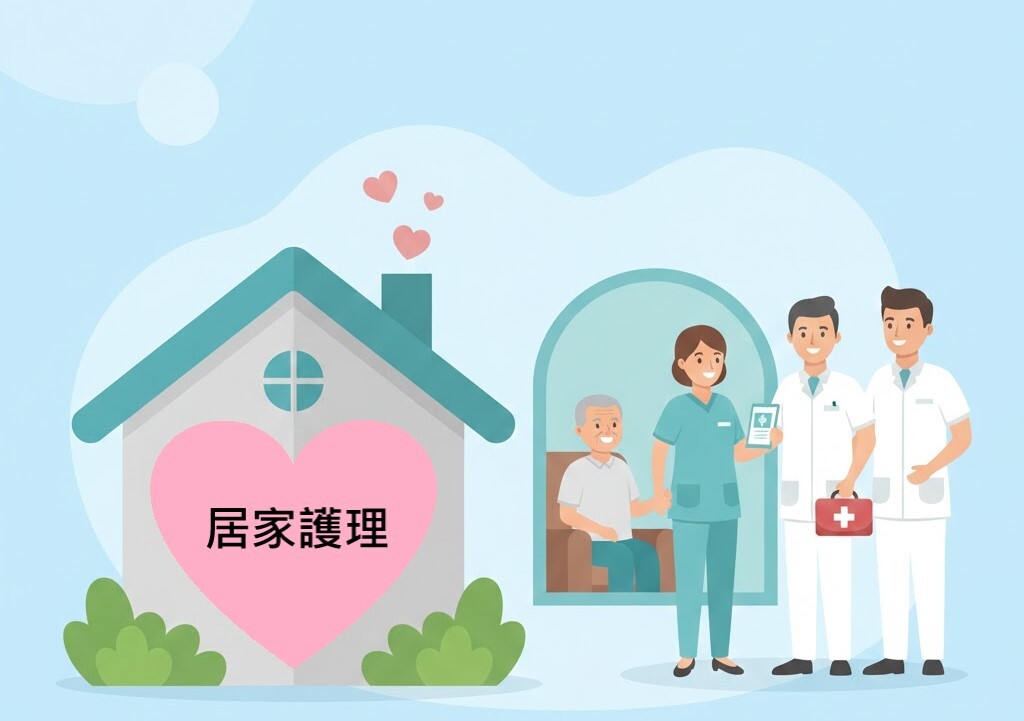
(Image source: AI-generated)
IV.Reference
- Smith, A. B., & Thompson, R. (2023). Medication-related falls in the elderly: The impact of polypharmacy and orthostatic hypotension. Geriatric Nursing, 51, 89–96.
-
Chaudhury, H., & Cooke, H. A. (2024). Home environment and safety for older adults with physical and cognitive impairments: A systematic review of intervention strategies. Journal of Applied Gerontology, 43(2), 158–172. https://doi.org/10.1177/07334648231201542
- Liu, Y., & Wang, J. (2025). Managing home safety in patients with chronic neurological conditions: Comprehensive nursing perspectives. International Journal of Nursing Studies, 148, Article 104612. https://doi.org/10.1016/j.ijnurstu.2024.104612
- Huang, C. Y., & Lee, S. (2026). Effectiveness of home modification programs on reducing fall injuries among community-dwelling older adults: A longitudinal study. BMC Geriatrics, 26, Article 45. https://doi.org/10.1186/s12877-025-05891-w
簡易測驗
Let us take the quiz to make sure you understand
評語
統計結果不開放
請登入後才可以評分
未登入或權限不足!
- 位置
-
- 資料夾名稱
- English
- 上傳者
- 黃郁琇
- 單位
- 中榮護理衛教
- 英文名稱
- How to maintain the safety of home environment
- 分類
- 安全
- 科別
- 英語
- 癌症照護
- 否
- 建立
- 2024-01-29 01:02:32
- 最近修訂
- 2026-03-12 14:41:12
- 版本
- 2026-03-12