超音波導引攝護腺切片檢查須知(Information on Ultrasound-Guided Prostate Biopsy)
【Learning points】
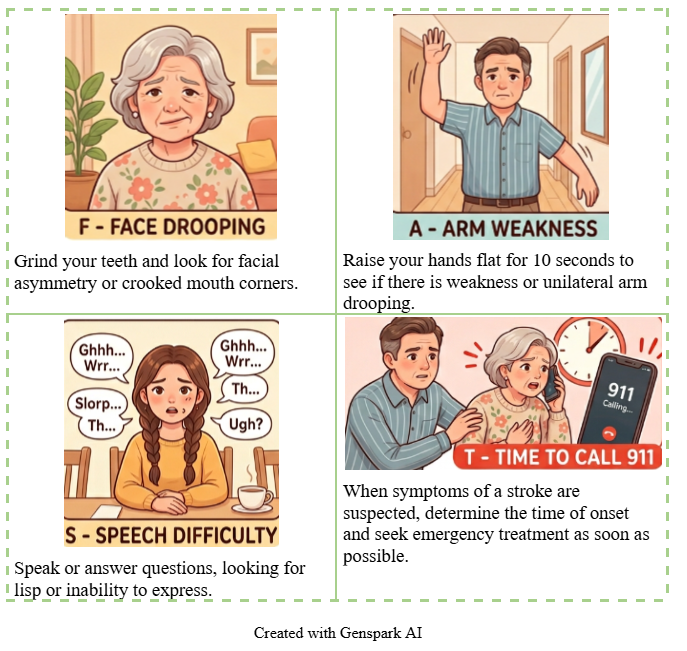
- The early symptoms of stroke are "FAST", F stands for face, A stands for hands, S stands for talking, and T stands for time. When a stroke occurs, you should stay calm. You should not give self-prescriptions and medicines, but seek medical attention immediately.
- The golden period of rehabilitation is within six months of stroke, so active rehabilitation treatment should be carried out after the condition stabilizes.
- Prevention is better than cure. You should pay attention to a balanced diet, control blood pressure and blood sugar, exercise appropriately, and get rid of bad living habits such as smoking and drinking to reduce the incidence of stroke and the serious harm caused.
I.Early warning signs of stroke
Representing four assessment items, simple formulas can allow people to quickly identify the early symptoms of stroke.
II.Emergency treatment in case of occurrence
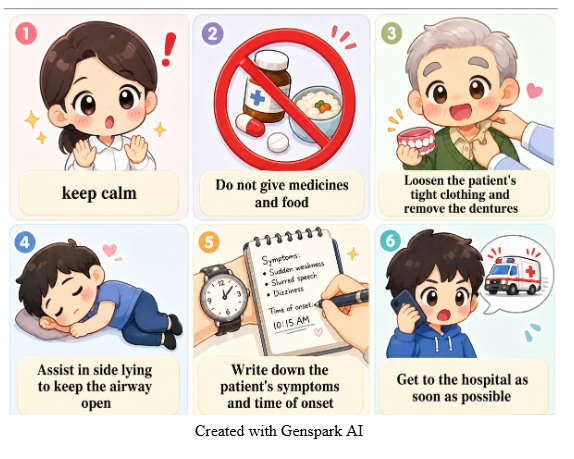
When faced with a suspected stroke situation, people must be caught off guard. First of all, you must keep calm and confirm the patient's consciousness, breathing and reaction status. The processing steps are as follows:
III. Precautions for daily care
1.Balanced diet, regular and quantitative.
2.Add more water, at least 2000cc a day, and take a lot of fiber food and exercise moderately to prevent constipation.
3.Avoid smoking, drinking and caffeinated beverages.
4.Reduce consumption of irritating foods, such as: strong tea and various spicy condiments (onion, ginger, garlic, chili, pepper, curry), etc.
5.A diet focused on vegetables and reduced processed foods.
6.Measure blood pressure, blood sugar and cholesterol regularly.
7.Follow the medication instructions and take the medication regularly.
8.Moderate exercise and active rehabilitation.
9. Keep your mood stable.
2.Add more water, at least 2000cc a day, and take a lot of fiber food and exercise moderately to prevent constipation.
3.Avoid smoking, drinking and caffeinated beverages.
4.Reduce consumption of irritating foods, such as: strong tea and various spicy condiments (onion, ginger, garlic, chili, pepper, curry), etc.
5.A diet focused on vegetables and reduced processed foods.
6.Measure blood pressure, blood sugar and cholesterol regularly.
7.Follow the medication instructions and take the medication regularly.
8.Moderate exercise and active rehabilitation.
9. Keep your mood stable.
10.Anticoagulation significantly reduces ischemic stroke risk in patients with previously known atrial fibrillation.
IV.If a stroke causes you to be unable to take care of yourself in daily life, you should pay attention to the following
- If the patient cannot turn over by himself, he should be assisted to turn over every two hours to avoid pressure injury.
- If the patient's balance and coordination are poor, someone needs to accompany the side, and the assister must be on the weaker side of the limb.
- In winter and when the temperature difference between morning and evening is large, keep your body warm to avoid vasoconstriction.
- Pay attention to personal hygiene and wipe the whole body daily.
- If you have urinary incontinence, you can fix it with a diaper or wrap it in a diaper, and wash your stool with clean water and use a diaper pad.
- Oral care is essential for patients experiencing dysphagia after a stroke.
V.Active Rehabilitation -PAC,Post Acute Care)
Six months is the best period for post-stroke movement control training. Since January 2014, patients with cerebral apoplexy have been provided with referral care after acute hospitalization to promote rehabilitation after the acute period and make disability immediate recover early.
- Nursing service content:Physiotherapy, Occupational Therapy and Speech Therapy.
- Application method:When the condition is stable and the person has positive recovery potential, after being evaluated by a specialist nurse or a stroke individual manager, provide information and assist in referral.
VI.Conclusion
Prevention is better than cure. You should pay attention to a balanced diet, control blood pressure and blood sugar, exercise appropriately, and get rid of bad habits such as smoking and drinking to reduce the incidence of stroke and its serious harm. Learn how to identify the early symptoms of stroke "FAST" Four assessments are represented for early detection and immediate medical attention.
VII.References
- Curtin, C., Barrett, A., Burke, F. M., McKenna, G., Healy, L., & Hayes, M. (2024). Exploring facilitators and barriers associated with oral care for inpatients with dysphagia post-stroke. Gerodontology, 41(3), 346–356. https://doi.org/10.1111/ger.12709
- Saad, A., Cherian, L., & Benameur, K. (2024). Lifestyle Factors and Stroke Prevention: From the Individual to the Community. Current neurology and neuroscience reports, 24(10), 507–515. https://doi.org/10.1007/s11910-024-01370-x
- Sposato, L. A., Cameron, A. C., Johansen, M. C., Katan, M., Murthy, S. B., Schachter, M., B Sur, N., Yaghi, S., Aspberg, S., Caso, V., Hsieh, C. Y., J Hilz, M., Nucera, A., Seiffge, D. J., Sheppard, M. N., Martins, S. C., Bahit, M. C., Scheitz, J. F., & Shoamanesh, A. (2025). Ischemic stroke prevention in patients with atrial fibrillation and a recent ischemic stroke, TIA, or intracranial hemorrhage: A World Stroke Organization (WSO) scientific statement. International journal of stroke : official journal of the International Stroke Society, 20(4), 385–400. https://doi.org/10.1177/17474930241312649
簡易測驗
Let's take a test to confirm that you have a thorough understanding.
評語
統計結果不開放
請登入後才可以評分
未登入或權限不足!
- 位置
-
- 資料夾名稱
- English
- 上傳者
- 賴曼云
- 單位
- 中榮護理衛教
- 英文名稱
- What to do after a stroke?
- 分類
- 疾病
- 科別
- 英語
- 癌症照護
- 否
- 建立
- 2024-01-25 13:26:27
- 最近修訂
- 2026-07-09 10:09:47
- 版本
- 2026-07-09