超音波導引攝護腺切片檢查須知(Information on Ultrasound-Guided Prostate Biopsy)
【Learning Points】
- Individuals with diabetes should perform daily foot inspections and maintain clean, dry feet.
- Diabetes patients should exercise caution when trimming nails and wear properly fitting shoes.
- Diabetes patients should avoid using hot water bottles or electric heating pads.
I.Why do Diabetic patients need foot care?
Patients with diabetes are susceptible to neurovascular changes due to prolonged hyperglycaemia, which reduces the sensation of temperature and pain. When an injury is not easily detected, coupled with poor blood circulation, the wound does not heal easily, resulting in inflammation, ulceration or even necrosis, which eventually necessitates amputation. Therefore, the prevention of diabetic foot disease is of paramount importance.
II.How to protect your feet?
(A)Check them every day for sores and cuts in bright area by your eyes, and if you are unable to see them clearly, ask your family to help.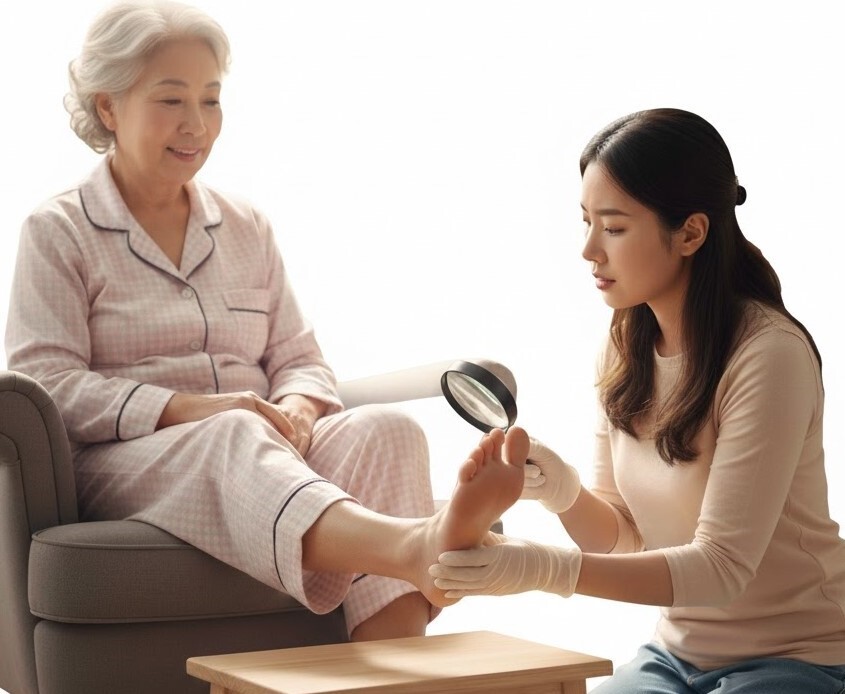 |
(B)Wash your feet with soap gently every day. Test water temperature with wrist in advnace. Dry them carefully, especially between the toes. |
(C)Rub a thin coat of skin lotion or baby oil to prevent dry skin. |
(D)Wear soft, flat shoes fitting well, check your shoes for foreign objects before putting them on.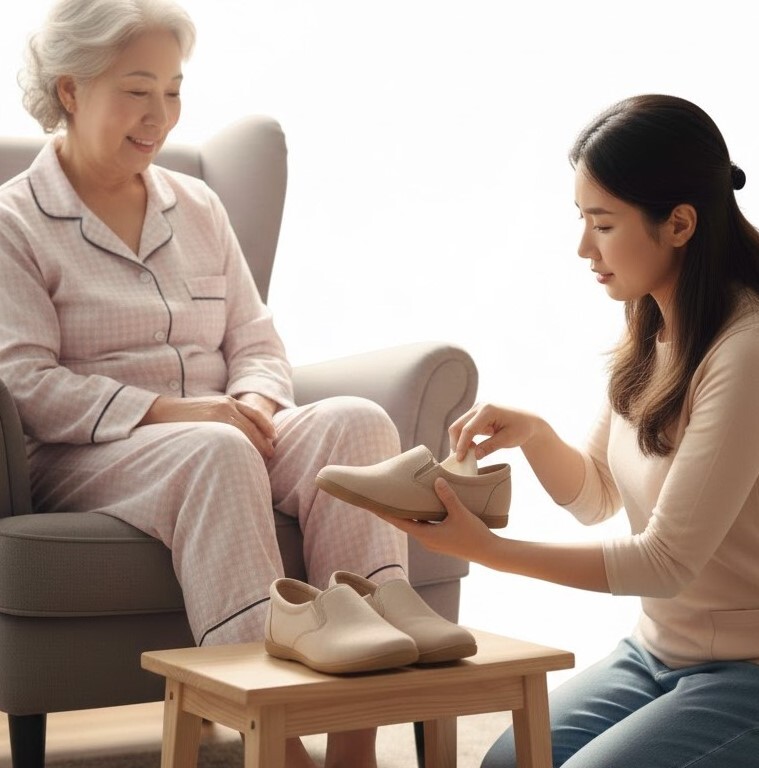 |
(E)Trim your toenails straight across with an emery board or nail file.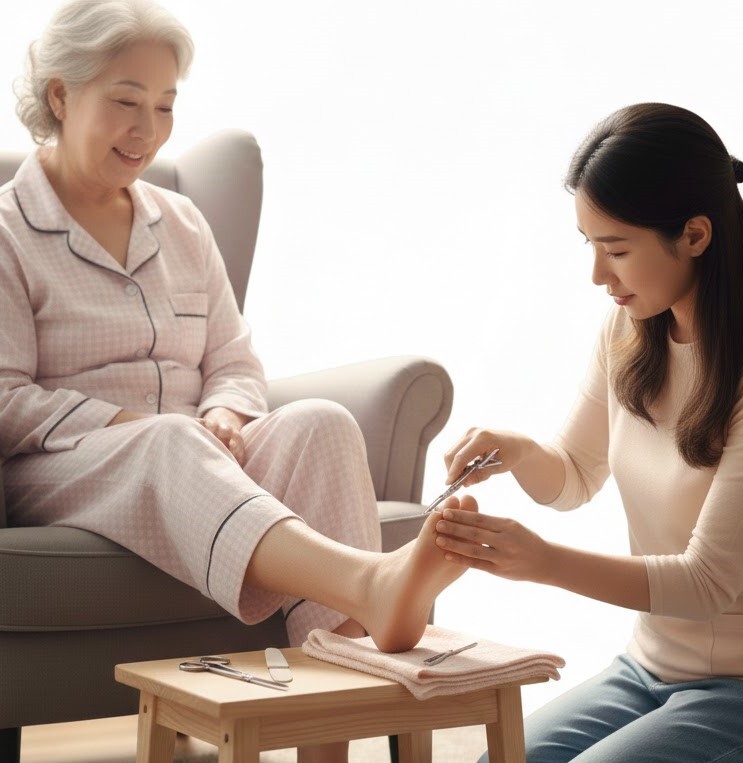 |
(F)Regular follow up with your doctor periodically. |
(G)Proper activity to improve blood circulation on your feet, such as walking. |
(Image source: AI-generated)
III.What should I look out for?
- Don’t let your feet immerse in hot water, or use hot water bag, or even get close to electric blanket and heater.
- Don't kick objects.
- Don't cross your legs.
- Don’t over trim your toenails.
- Never walk barefoot or put on slippers for outdoor activities.
- Don't cut corns and calluses by yourself.
- Don't smoke.
- See a doctor right away if you get any wound. Don’t use medicine by yourself.
- Don't wear trousers and socks that are too tight. Socks that have no seams are the best.
IV.Conclusion
To prevent diabetic foot ulcers, proper daily foot examination and care is essential, such as: observing the toes and soles of the feet for dry cracks, swelling, blisters and wounds; washing the feet with warm water and drying them with a soft towel and applying appropriate lotion or baby oil; trimming the toenails regularly and wearing soft, well-fitting shoes. If you have any trauma or other symptoms, you should seek immediate medical attention to prevent the wound from deteriorating and leading to amputation. Prevention of diabetic foot requires the concerted efforts of healthcare professionals, patients and family members.
V.References
- 黃郁婷、李美華、張淑真(2023)。提升糖尿病高齡者足部護理行為正確率之改善方案。長期照護雜誌,27(2),102-115。https://doi.org/10.6317/LTC.202308_27(2).0008
- American Diabetes Association. (2024). Retinopathy, neuropathy, and foot care: Standards of care in diabetes—2024. Diabetes Care, 47(Supplement_1), S231-S243. https://doi.org/10.2337/dc24-S012
- Chen, Y. C., & Wang, S. L. (2024). The role of therapeutic footwear in preventing primary and secondary diabetic foot ulcers: A 2024 update. International Journal of Lower Extremity Wounds, 23(3), 205-214.
- Smith, K. L., & Peterson, M. (2025). Thermally induced injuries in diabetic foot: New evidence for prevention strategies. Journal of Vascular Nursing, 43(1), 12-19.
簡易測驗
Let us take the quiz to make sure you understand
評語
統計結果不開放
請登入後才可以評分
未登入或權限不足!
- 位置
-
- 資料夾名稱
- English
- 上傳者
- 黃郁琇
- 單位
- 中榮護理衛教
- 英文名稱
- Foot Care in Diabetes
- 分類
- 三高
- 科別
- 英語
- 癌症照護
- 否
- 建立
- 2024-01-24 05:15:23
- 最近修訂
- 2026-03-12 14:41:17
- 版本
- 2026-03-12